알고리즘 기초 다지기 프로젝트 (feat. 코드없는 프로그래밍) [2021년 06월 11일]
HashTable 개념 정리
Insertion / find: O(1) 의 시간복잡도- 이 특성 상
sort는 불가능
- key - value 관계를 가짐
const objMap = {
Apple: 5,
Banana: 2,
Orange: 10,
};
여기서 Banana 를 찾으려면
- Array의 경우 O(n) 의 시간복잡도를 가짐.
- HashTable의 경우 O(1) 의 시간복잡도를 가짐.
- Array처럼 순회하는게 아니라 바로 찾음
- HashTable에는
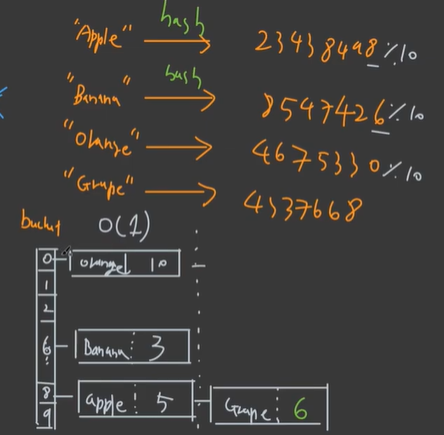
hashFunction이 있음.
- output space가 정해져있고 input에 따라 Distribution이 됨
(input(key 값)에 따라 hashCode로 변경해주는 듯)
- hashCode로 변경된 값이 충돌이 날 수 있는데,
HashMap을 만드는데에는 아무 이상이 없음
- 충돌을 최소화 위해 만들어졌음.
Hash Table과 Hash Map은 다른 것 같은데...?
참고: Java에서의 HashMap과 HashTable의 차이
-
HashTable은 내부적으로 LinkedList를 활용하는 듯
hashCode가 생성 될 때 Apple의 hashCode는 23438498 이라면
내부적으로 % 10을 하여 8 을 반환, 그리고 8번째 index에 key-value를 생성해줌
만약 다음에 들어오는 아이템이 % 10 했을 시 같다면, 해당 index에 넣어주되
Apple을 뒤에 바로 생성해 줌!
-
각 index의 위치에 많은 값이 있다면 시간복잡도는 O(n) 이 되어버리는데
이건 걱정할 일은 아님.
내부적으로 Handling을 해줌. 그러므로 O(1) 이라고 생각하고 있기!!
-
참고용 스샷
Leetcode - Design HashMap
문제: LeetCode - 706. Design HashMap
- 강의엔 없는 문제. HashMap 구조를 알아보려 푸는 문제!
코드
var MyHashMap = function () {
hashMap = {};
};
MyHashMap.prototype.put = function (key, value) {
hashMap[key] = value;
};
MyHashMap.prototype.get = function (key) {
const result = hashMap[key];
return typeof result === 'undefined' || typeof result === 'null'
? -1
: result;
};
MyHashMap.prototype.remove = function (key) {
delete hashMap[key];
};
class MyHashMap {
  hashMap = {};
  put = (key, value) => (this.hashMap[key] = value);
  get = (key) =>
    typeof this.hashMap[key] === 'undefined' ||
    typeof this.hashMap[key] === 'null'
      ? -1
      : this.hashMap[key];
  remove = (key) => delete this.hashMap[key];
}
- 시간복잡도: 180 ms / faster than 99.51%
- 공간복잡도: 48.7 MB / less than 54.22%
참고 자료
강의
알고리즘 기초 다지기 프로젝트 (feat. 코드없는 프로그래밍) [2021년 06월 11일]
HashTable 개념 정리
Insertion / find: O(1) 의 시간복잡도sort는 불가능여기서 Banana 를 찾으려면
hashFunction이 있음.(input(key 값)에 따라 hashCode로 변경해주는 듯)
HashMap을 만드는데에는 아무 이상이 없음
HashTable은 내부적으로 LinkedList를 활용하는 듯
hashCode가 생성 될 때 Apple의 hashCode는 23438498 이라면
내부적으로 % 10을 하여 8 을 반환, 그리고 8번째 index에 key-value를 생성해줌
만약 다음에 들어오는 아이템이 % 10 했을 시 같다면, 해당 index에 넣어주되
Apple을 뒤에 바로 생성해 줌!
각 index의 위치에 많은 값이 있다면 시간복잡도는 O(n) 이 되어버리는데
이건 걱정할 일은 아님.
내부적으로 Handling을 해줌. 그러므로 O(1) 이라고 생각하고 있기!!
참고용 스샷
Leetcode - Design HashMap
문제: LeetCode - 706. Design HashMap
코드
시간복잡도: 196ms / faster than 81.66%
공간복잡도: 49.1 MB / less than 43.02%
코드 (2) : ES6 Classes
참고 자료
강의